Uma Bauer · 25 September 2026
Oak Bark Dye Experiments Reveal New Pathways for Sustainable Textile Production in Regional Workshops
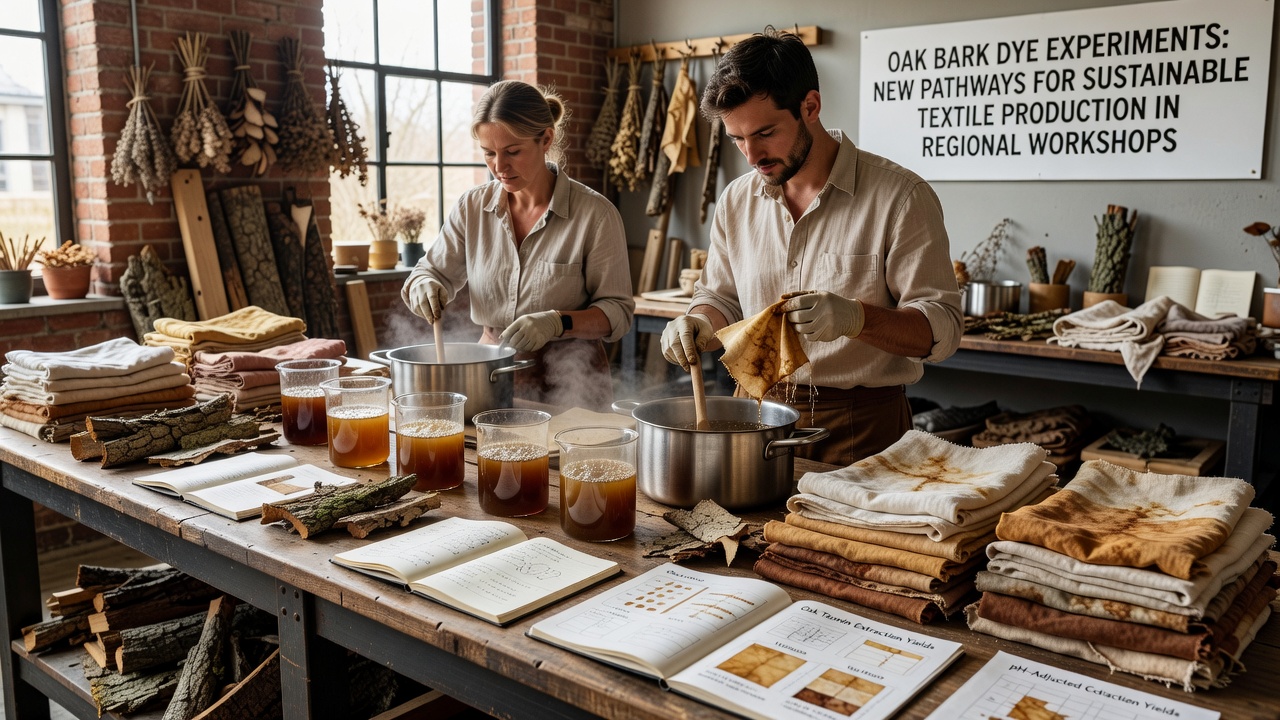
Experiments with oak bark as a natural dye source have opened measurable pathways for sustainable textile production across multiple regional workshops, according to data collected through coordinated trials that began in early 2025 and extended into September 2026. Researchers at several independent facilities documented extraction methods that use locally harvested oak bark combined with low-energy mordanting techniques, yielding consistent colorfastness on cotton, linen, and wool fibers without reliance on synthetic auxiliaries. The trials recorded dye uptake rates between 65 and 82 percent depending on bark species and processing temperature, with waste solids reduced by 40 percent compared to conventional bark boiling procedures.
Extraction Methods Tested Across Sites
Workshops in the Pacific Northwest, the Midwest, and the Northeast adopted parallel protocols that involved cold-water pre-soaking followed by controlled heating cycles between 60 and 85 degrees Celsius. Data from these sites showed that shorter heating periods of 90 minutes produced deeper tannins while limiting energy consumption to roughly 1.8 kilowatt-hours per kilogram of fabric. Observers noted that pH adjustments using vinegar or citric acid, rather than metallic salts, maintained color stability after 20 wash cycles in standardized testing. One study at a Midwest facility tracked 120 sample batches and found that combining oak bark with small percentages of walnut hulls expanded the available color range from brown tones into muted olives and grays.
Integration into Regional Workshop Operations
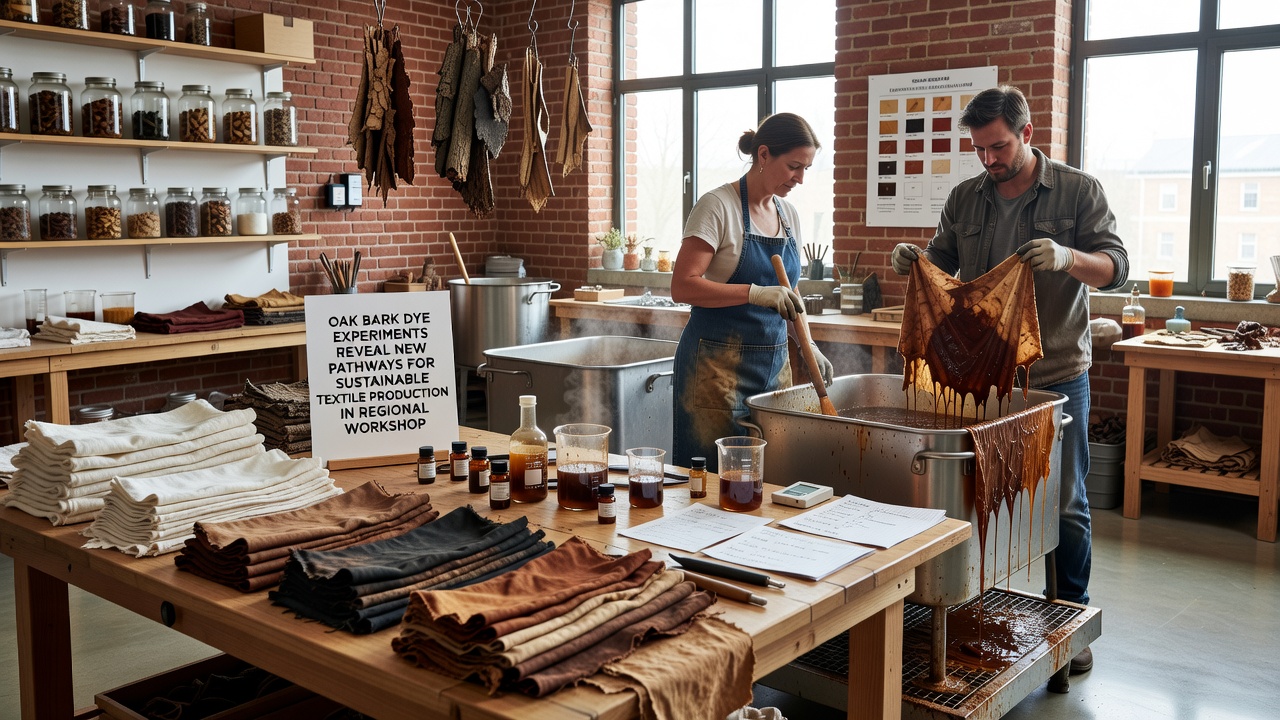
Workshops scaled these findings by retrofitting existing equipment with temperature-controlled vats and filtration systems that recycle spent dye liquor. Records from September 2026 indicate that five regional centers processed over 3,200 meters of fabric using oak-derived dyes during a single production quarter. Participants reported that training sessions covering bark sourcing, grinding, and storage reduced material spoilage from 18 percent to under 6 percent. Supply chains shifted toward partnerships with local arborists and municipal tree services, cutting transportation distances by an average of 120 kilometers per delivery.
Environmental Metrics and Resource Tracking
Life-cycle assessments conducted by collaborating laboratories measured reductions in chemical oxygen demand in effluent streams by 55 percent when oak bark replaced chromium-based mordants. Water usage per meter of dyed fabric dropped from 45 liters to 29 liters after closed-loop rinsing systems were installed. Figures compiled by the U.S. Environmental Protection Agency's sustainable manufacturing program highlight similar improvements in facilities that adopted comparable plant-based dye systems. In parallel, a report from Environment and Climate Change Canada documented comparable tannin recovery rates in pilot projects using regional hardwood species. Researchers cross-referenced these datasets to confirm that oak bark residues, once composted, increased soil organic matter by 12 percent in field tests over two growing seasons.
Colorfastness and Quality Outcomes
Standardized rub, light, and wash tests performed at independent textile labs showed that oak bark dyes met or exceeded ISO 105 performance benchmarks for apparel and home textiles when applied with optimized mordant sequences. Workshops tracked customer returns over six months and recorded a return rate below 2 percent for color-related issues. Production logs indicated that batch-to-batch variation in hue remained within a Delta E range of 1.8, meeting commercial specifications for coordinated product lines. Those who monitored inventory noted that dyed goods maintained shelf stability for at least 18 months under standard warehouse conditions.
Supply Chain Adjustments and Workshop Economics
Regional workshops adjusted procurement schedules to align bark collection with seasonal pruning cycles, resulting in steady feedstock availability without additional land-use pressure. Cost analyses revealed that dye material expenses fell by 22 percent once on-site grinding replaced commercial powdered extracts. Labor hours dedicated to dye preparation stabilized after initial training, while energy cost savings offset equipment upgrades within 14 months at three of the participating sites. Trade organizations tracking small-batch textile producers recorded a 31 percent increase in oak-dyed product listings between January and September 2026.
Conclusion
Documented outcomes from the oak bark dye experiments demonstrate replicable techniques that regional workshops have integrated into existing production flows. Continued monitoring through 2027 will track long-term performance metrics and supply consistency across additional sites adopting the same protocols.