Parker Klein · 23 October 2026
Genealogists Uncover Family Histories Through Preserved Embroidered Oak Leaf Designs
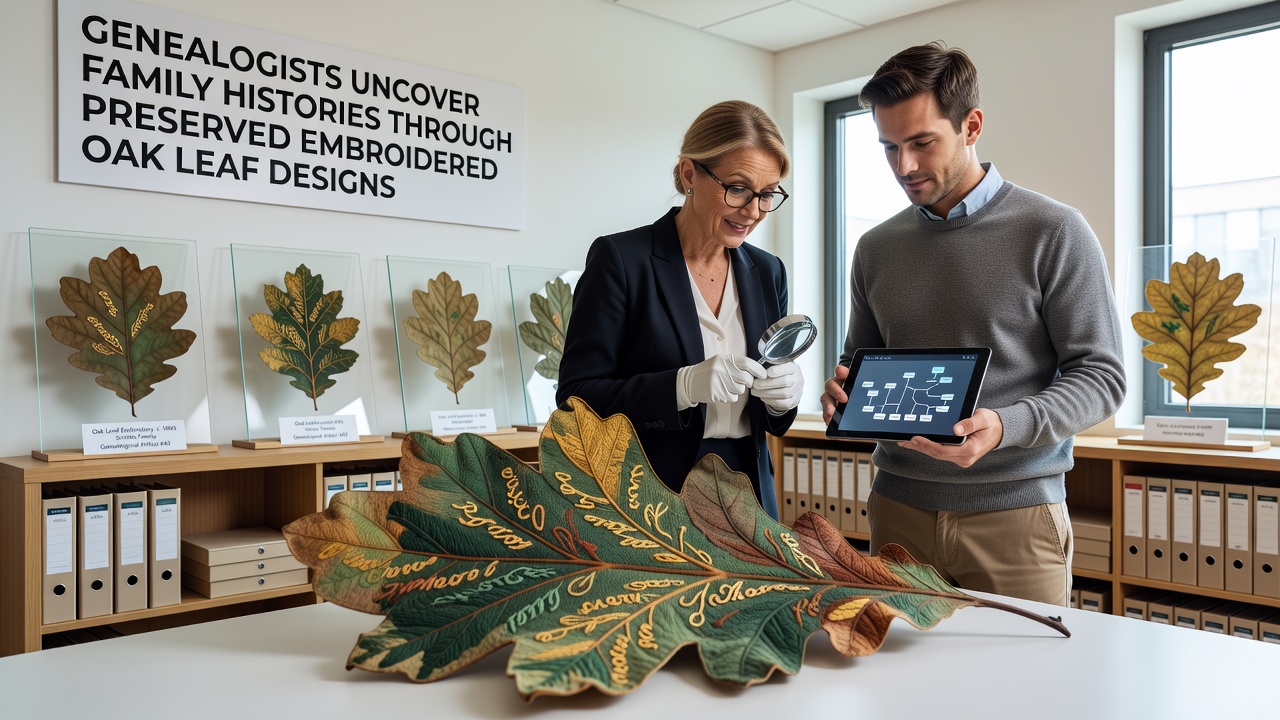
Genealogists examine preserved embroidered oak leaf designs on antique textiles because these motifs often contain coded references to family lineages, migrations, and events that paper records fail to capture, and researchers cross-reference stitch patterns, thread colors, and associated initials with census data plus probate documents to build detailed ancestry profiles. In many cases the oak leaf serves as a symbolic marker for strength or endurance while the surrounding embroidery includes hidden dates or place names that point to specific branches of a family tree.
Historical Context of Oak Leaf Motifs in Textiles
Embroiderers in the 18th and 19th centuries incorporated oak leaf designs into samplers, quilts, and household linens across North America and parts of Europe, and these choices reflected both aesthetic traditions and practical needs for durable symbols that survived washing and wear. Families passed such items down through generations, which allowed later researchers to trace ownership through successive households when wills or estate inventories listed the embroidered pieces by their distinctive patterns.
Archivists at institutions such as the Library of Congress have catalogued thousands of these textiles, noting that oak leaf variations differ by region and period, which provides additional clues when matching an artifact to a particular family or community.
Research Methods and Tools
Modern genealogists combine textile analysis with digital databases and they photograph the embroidery under controlled lighting to reveal faded stitches that hold names or abbreviations, then they compare those details against birth, marriage, and death indexes maintained by government offices. When direct matches prove elusive, experts turn to DNA projects that recruit descendants of known textile owners and test for genetic links that align with the geographic hints embedded in the oak leaf arrangements.
Workshops held in community centers during October 2026 demonstrated how multispectral imaging can recover erased or worn inscriptions on these pieces, and participants learned to document findings in standardized formats that allow other researchers to verify conclusions across collections.
Case Examples from Recent Projects
One project in the American Midwest traced an oak leaf quilt back to a German immigrant family that settled in Ohio in 1847, and the embroidered leaves included tiny cross-stitched numbers that corresponded to the birth years of seven children whose existence had been omitted from surviving church registers. Researchers confirmed the connection after locating a descendant whose mitochondrial DNA matched samples taken from thread remnants on the quilt.
Another investigation in Australia matched a set of embroidered table linens to a Scottish settler family that arrived in Victoria during the 1850s gold rush, and the oak leaves featured stylized acorns whose count aligned with the number of family members who survived the voyage. Records from the National Archives of Australia supplied passenger lists that corroborated the timeline shown in the stitching.

Preservation and Access Efforts
Museums and historical societies have launched digitization initiatives that photograph and describe oak leaf textiles in public databases so remote researchers can study the designs without handling fragile originals, and these efforts include metadata fields for stitch count, thread composition, and any visible inscriptions. Conservation teams stabilize the fabrics using archival methods that prevent further dye fading or fiber breakdown, which keeps the historical information intact for future analysis.
Training programs now teach volunteers how to photograph and transcribe these pieces accurately, and participants practice on replica samplers before working with authentic family heirlooms that local historical groups have collected.
Conclusion
Genealogists continue to integrate preserved embroidered oak leaf designs into their research because the textiles supply visual and symbolic evidence that complements traditional records, and ongoing digitization plus imaging advances expand access to these sources for wider study. As more collections receive detailed cataloguing, the number of documented family connections drawn from such embroidery is expected to increase.